
Which parquet works best in a kitchen?
A kitchen can work well with engineered parquet when specification, installation, and maintenance are handled with discipline.
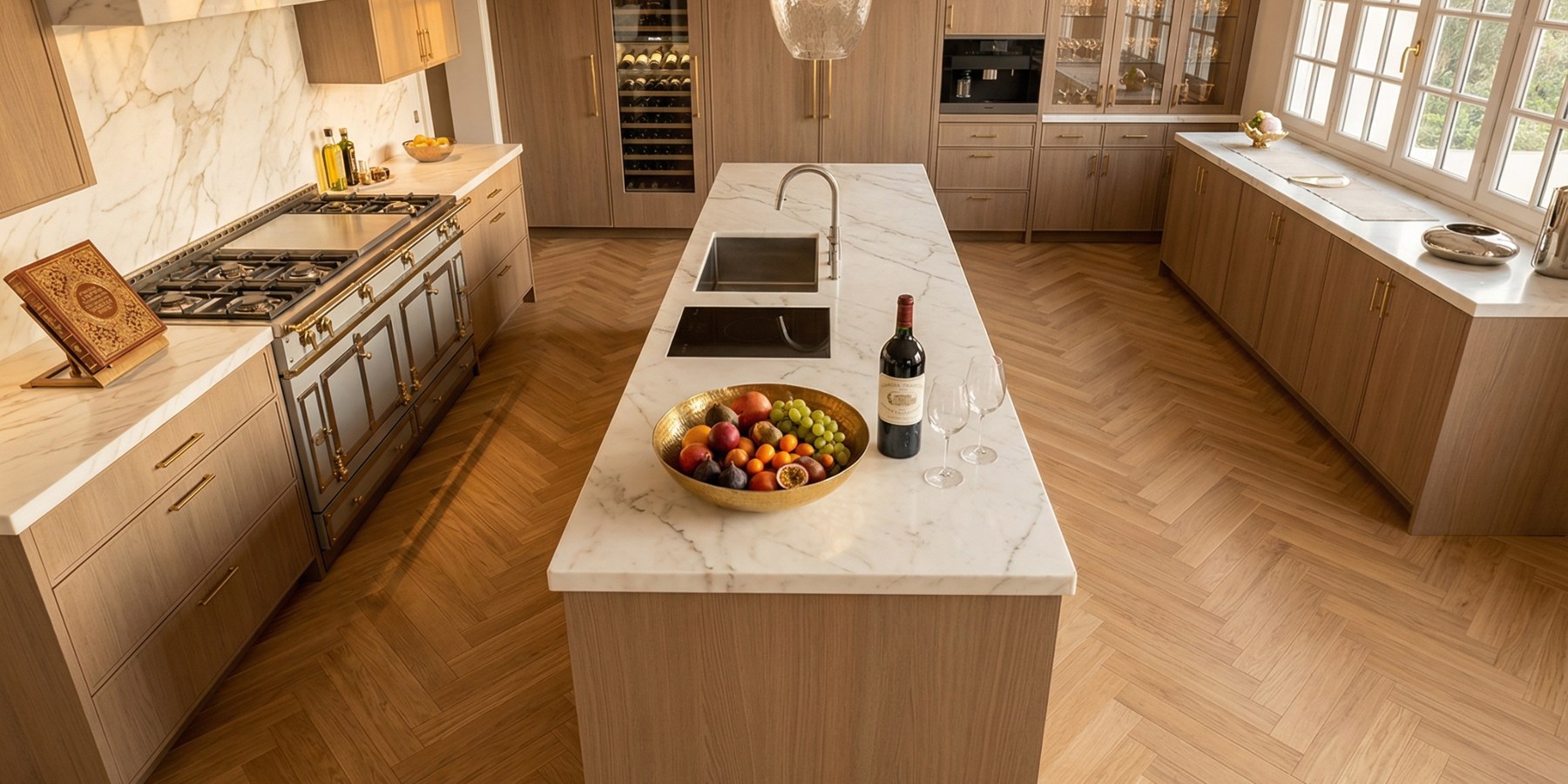
Which parquet works best in a kitchen?
Kitchen success depends on disciplined maintenance, prompt cleaning of splashes, stable indoor conditions, and realistic product selection.
- Review samples in the real room before approval.
- Match the floor with light, room use, and maintenance expectations.
- Ask for professional guidance where finish, pattern, or transitions are critical.
Related product paths
Use the links below to move directly from guidance into product selection or project support.
Prefer engineered constructions
In kitchens, engineered parquet is usually preferred because it offers better dimensional stability than more movement-prone solid constructions.
Think about splash zones
Around sinks, dishwashers, and high-risk preparation zones, fast cleaning matters. Parquet is not a licence to ignore moisture. Splashes should be wiped immediately and standing water should never be allowed to remain.
Choose finish with care
Kitchen flooring often benefits from finishes that are practical to maintain and less visually demanding in daily use. The right finish should be discussed together with cleaning routines and expected traffic.
Know when another surface may be better
In certain utility-heavy or extremely wet zones, tile or stone may still be the more appropriate specification. Good guidance is not about forcing parquet everywhere; it is about using it where it can perform beautifully and honestly.
Need project support?
Request samples, ask for a quotation, or speak with our team about product fit, room use, and specification logic.